
Most professionals start their day with good intentions—only to end it feeling exhausted, distracted, and oddly unaccomplished.
The problem isn’t a lack of effort.
It’s the type of work dominating the day.
Broadly, work falls into two categories: Reactive Work and Deep Focused Work.
Understanding the difference—and designing your environment around it—can completely change how productive your workdays feel.
What Is Reactive Work?
Reactive work is driven by external demands.
It includes:
- Responding to emails and messages
- Jumping into unscheduled calls
- Handling interruptions
- Fixing “urgent” issues
- Constant context switching
Reactive work keeps you busy but rarely moves the needle.
It creates:
- Mental fatigue
- Shallow thinking
- A constant feeling of being behind
- Workdays that feel full but unfulfilling
For many professionals working from home or noisy cafés, reactive work becomes the default.
What Is Deep Focused Work?
Deep focused work is intentional, uninterrupted, and cognitively demanding.
This is the work where:
- Strategies are developed
- Reports and proposals are completed
- Creative thinking happens
- Important decisions are made
Deep work requires:
- Time blocks
- Minimal distractions
- A calm, structured environment
Unlike reactive work, deep work produces real progress.
Why Most People Struggle With Deep Work
The challenge isn’t motivation or discipline.
It’s environment.
Trying to do deep work in a space full of interruptions—home distractions, unreliable Wi-Fi, noise, or constant movement—makes focus almost impossible.
Your brain is constantly switching modes:
Thinking → reacting → responding → refocusing.
That mental switching is costly.
How a Coworking Space Supports Deep Focused Work
A well-designed coworking space does more than provide a desk.
It offers:
- Reliable high-speed internet (no constant troubleshooting)
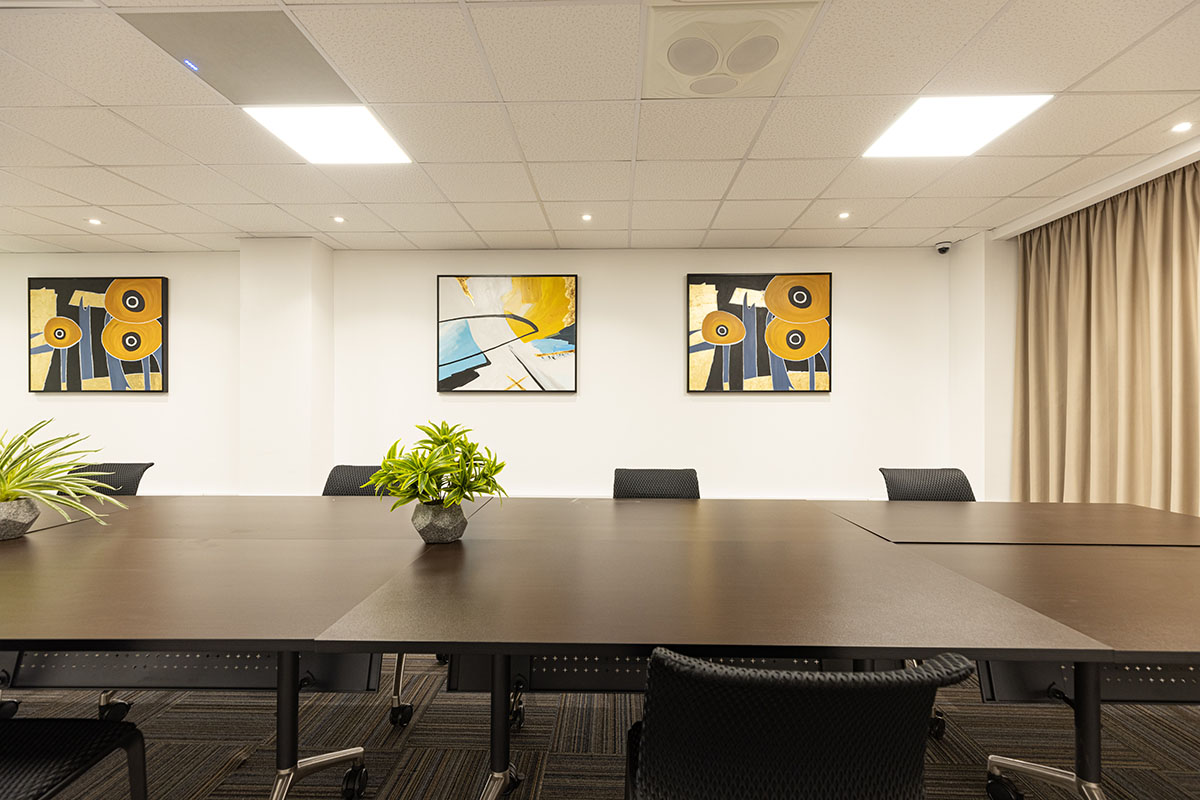
- Quiet zones and structured layouts
- Professional boundaries that reduce interruptions
- A mental shift from “home mode” to “work mode”
- Consistency and routine that supports focus
When your environment is intentional, deep work becomes natural—not forced.
Reactive Work Isn’t the Enemy—But It Shouldn’t Run Your Day
Reactive work will always exist.
Emails must be answered. Calls must be taken.
But when reactive work dominates your day, growth stalls.
The goal isn’t to eliminate reactive work—it’s to protect space for deep focused work.
And that starts with where you work from.
Final Thought
Productivity isn’t about doing more.
It’s about creating the conditions for meaningful work.
If your current setup constantly pulls you into reaction mode, it may be time to rethink your workspace—not your work ethic.
A calm, professional environment might be the missing link between effort and results.